























Contents
- 1 What Is 55 Degrees Celsius in Fahrenheit?
- 1.1 Understanding the Difference Between Celsius and Fahrenheit
- 1.2 The Exact Formula to Convert Celsius to Fahrenheit
- 1.3 Why 55°C (131°F) Is Extremely Hot
- 1.4 When Might You Encounter 55°C?
- 1.5 Quick Mental Math Trick for Conversions
- 1.6 Why Temperature Conversion Matters
- 1.7 Health Risks at 55°C (131°F)
- 1.8 Celsius to Fahrenheit Conversion Chart
- 1.9 The History Behind the Scales
- 1.10 Why the U.S. Still Uses Fahrenheit
- 1.11 Practical Example: Converting Other Values
- 1.12 Temperature in Daily Life
- 1.13 Scientific Importance of Accurate Conversion
- 1.14 Common Mistakes People Make
- 1.15 Is 55°C the Hottest Temperature on Earth?
- 1.16 Why This Knowledge Helps Travelers
- 1.17 Final Thoughts: Why 55 Degrees Celsius in Fahrenheit Matters
What Is 55 Degrees Celsius in Fahrenheit?
Have you ever checked a weather report from another country and paused at a temperature that made no sense? Maybe you saw 55°C and wondered whether that’s pleasantly warm, dangerously hot, or something in between. If you’re here asking what 55 Degrees Celsius in Fahrenheit really means, you’re not alone. Temperature conversion is one of those everyday math skills we all need at some point — whether we’re cooking, traveling, studying science, or just satisfying curiosity.
Let’s clear it up right away.
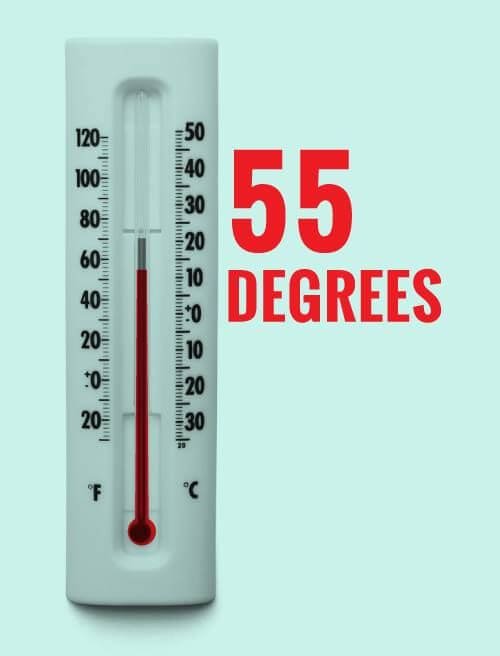
55 Degrees Celsius in Fahrenheit equals 131 degrees Fahrenheit.
That’s not just warm. That’s extremely hot.
But how do we get that number? Why does it matter? And how can you quickly convert Celsius to Fahrenheit without reaching for a calculator every time? In this guide, we’ll walk through everything in a simple, conversational way — no confusing jargon, just practical understanding.
Understanding the Difference Between Celsius and Fahrenheit
Before diving deeper into 55 Degrees Celsius in Fahrenheit, it helps to understand the two temperature scales.
The Celsius Scale
Celsius, also called centigrade, is part of the metric system. It’s used in most countries worldwide. On this scale:
- Water freezes at 0°C
- Water boils at 100°C
- Normal body temperature is around 37°C
Because it’s based on the properties of water, the Celsius scale feels logical and clean.
The Fahrenheit Scale
Fahrenheit is mainly used in the United States and a few other places. On this scale:
- Water freezes at 32°F
- Water boils at 212°F
- Normal body temperature is around 98.6°F
At first glance, Fahrenheit seems less intuitive. However, it offers more granular temperature intervals, which some people find helpful for daily weather reporting.
When converting 55 Degrees Celsius in Fahrenheit, we’re simply moving between these two measurement systems.
The Exact Formula to Convert Celsius to Fahrenheit
Now let’s talk math — but don’t worry, it’s simple.
The formula for converting Celsius to Fahrenheit is:
F = (C × 9/5) + 32
To calculate 55 Degrees Celsius in Fahrenheit:
-
Multiply 55 by 9/5
-
Add 32
Step-by-step:
55 × 9/5 = 99
99 + 32 = 131
So again, 55 Degrees Celsius in Fahrenheit equals 131°F.
It’s straightforward once you see it done.
Why 55°C (131°F) Is Extremely Hot
Let’s put 55 Degrees Celsius in Fahrenheit into perspective.
131°F is not typical summer heat. It’s far beyond normal weather conditions in most parts of the world. In fact:
- Most heat waves range between 35°C and 45°C
- 50°C is already considered extreme
- 55°C is life-threatening in prolonged exposure
At 131°F, you’re looking at serious risks of heatstroke, dehydration, and heat exhaustion.
Real-World Comparisons
To understand 55 Degrees Celsius in Fahrenheit better, compare it to these common temperature benchmarks:
| Temperature | Celsius | Fahrenheit |
|---|---|---|
| Freezing Point | 0°C | 32°F |
| Room Temperature | 20°C | 68°F |
| Body Temperature | 37°C | 98.6°F |
| Very Hot Day | 40°C | 104°F |
| Extreme Heat | 50°C | 122°F |
| 55 Degrees Celsius in Fahrenheit | 55°C | 131°F |
When you see it laid out like this, the intensity becomes clear.
When Might You Encounter 55°C?
You won’t normally experience 55 Degrees Celsius in Fahrenheit as a daily outdoor temperature. However, there are specific scenarios where this number appears.
1. Desert Environments
Certain desert regions in the Middle East or North Africa occasionally approach extreme temperatures. While 55°C is rare, ground surface temperatures can exceed it.
2. Industrial Settings
In factories, ovens, engines, and manufacturing equipment, temperatures can easily reach or surpass 55°C.
3. Cooking and Baking
Some food safety guidelines reference Celsius measurements. Converting 55 Degrees Celsius in Fahrenheit can help when checking internal cooking temperatures.
4. Science and Laboratory Experiments
Scientific research often uses Celsius as the standard measurement unit. Lab technicians regularly convert Celsius to Fahrenheit for reporting or analysis.
Quick Mental Math Trick for Conversions
You don’t always need the full formula. Here’s a faster estimation method:
- Double the Celsius temperature
- Add 30
Let’s try it with 55:
55 × 2 = 110
110 + 30 = 140
That gives you an approximate answer of 140°F. The exact value for 55 Degrees Celsius in Fahrenheit is 131°F, so this method slightly overestimates — but it’s close enough for casual use.
If precision matters, always use the full formula.
Why Temperature Conversion Matters
You might wonder: does knowing 55 Degrees Celsius in Fahrenheit really matter?
Actually, yes.
Temperature affects:
- Weather forecasts
- Climate studies
- Cooking recipes
- Medical readings
- Engineering calculations
- HVAC systems
- International travel
- Scientific experiments
In today’s global world, switching between measurement systems is common.
For example, imagine reading a European oven instruction manual. It lists 180°C. If you’re in the U.S., you’ll need Fahrenheit conversion to avoid undercooking or burning your meal.
Health Risks at 55°C (131°F)
Understanding 55 Degrees Celsius in Fahrenheit isn’t just academic. It can be a matter of safety.
At 131°F, the human body struggles to regulate heat. The risk of heat-related illnesses increases rapidly.
Possible Effects Include:
- Severe dehydration
- Heat exhaustion
- Heatstroke
- Organ stress
- Fainting
- Rapid heart rate
Moreover, prolonged exposure can become fatal without cooling or hydration.
If temperatures approach 55°C outdoors, emergency measures are typically advised.
Celsius to Fahrenheit Conversion Chart
For reference, here’s a helpful comparison chart:
| Celsius | Fahrenheit |
|---|---|
| 10°C | 50°F |
| 20°C | 68°F |
| 30°C | 86°F |
| 40°C | 104°F |
| 45°C | 113°F |
| 50°C | 122°F |
| 55°C | 131°F |
| 60°C | 140°F |
This makes it easier to visualize where 55 Degrees Celsius in Fahrenheit sits within the broader temperature spectrum.
The History Behind the Scales
Understanding temperature scales adds context.
The Celsius scale was developed by Anders Celsius, a Swedish astronomer. It was later reversed to the modern format we use today.
The Fahrenheit scale was developed by Daniel Gabriel Fahrenheit, a physicist. He based his scale on brine mixtures and early temperature experiments.
Though both systems measure heat, they start from different reference points. That’s why 55 Degrees Celsius in Fahrenheit looks like such a large number.
Why the U.S. Still Uses Fahrenheit
This question often comes up. Why hasn’t the U.S. fully switched to Celsius?
The short answer is tradition and infrastructure. Weather systems, thermometers, building codes, and education systems are built around Fahrenheit. Changing everything would be costly.
However, globally, Celsius dominates scientific, academic, and international standards.
Practical Example: Converting Other Values
Once you understand 55 Degrees Celsius in Fahrenheit, converting other numbers becomes easier.
For example:
- 25°C = 77°F
- 35°C = 95°F
- 45°C = 113°F
Notice how each 5°C increase significantly raises the Fahrenheit value.
This demonstrates how rapidly temperatures climb in extreme heat conditions.
Temperature in Daily Life
Temperature impacts everyday decisions more than we realize:
- Choosing clothing
- Setting air conditioning
- Cooking meat safely
- Storing food
- Planning outdoor activities
Understanding conversions like 55 Degrees Celsius in Fahrenheit ensures accuracy and safety.
Scientific Importance of Accurate Conversion
In scientific fields such as chemistry, physics, and meteorology, precise temperature measurement is critical.
For example:
- Chemical reactions depend on exact heat levels
- Climate models require consistent units
- Medical equipment relies on temperature calibration
Even a small miscalculation can lead to incorrect results. Therefore, knowing the exact value of 55 Degrees Celsius in Fahrenheit — 131°F — matters in professional settings.
Common Mistakes People Make
When converting Celsius to Fahrenheit, people often:
- Forget to multiply by 9/5
- Add 32 first instead of last
- Use incorrect rounding
- Confuse Celsius with Kelvin
To avoid errors, follow the formula carefully and double-check your math.
Is 55°C the Hottest Temperature on Earth?
Not quite, but it’s close to record territory.
Some of the highest recorded air temperatures on Earth have reached around 56°C in certain desert regions. That’s slightly higher than 55 Degrees Celsius in Fahrenheit.
However, such extremes are rare and often measured under very specific conditions.
Why This Knowledge Helps Travelers
If you travel internationally, temperature conversion becomes practical.
Imagine landing in a country where the forecast says 40°C. If you’re used to Fahrenheit, converting quickly helps you prepare.
Similarly, if you encounter 55 Degrees Celsius in Fahrenheit in industrial data or global news reports, you’ll immediately understand the severity.
Final Thoughts: Why 55 Degrees Celsius in Fahrenheit Matters
By now, the answer should feel simple and clear.
55 Degrees Celsius in Fahrenheit equals 131°F.
Yet beyond the number lies practical understanding. It’s about safety, science, travel, cooking, and everyday life. Temperature isn’t just a statistic — it influences comfort, health, and decision-making.
Learning how to convert Celsius to Fahrenheit empowers you. It builds confidence. It saves time. And it prevents mistakes.
If this guide helped you understand temperature conversion better, share it with someone who still struggles with Celsius and Fahrenheit math. Or leave a comment with another temperature you’d like converted.