











New York City is on the cusp of a political watershed: Zohran Mamdani, a young democratic socialist, has been elected as the next New York City Mayor. But who is he really? Why has his campaign struck a chord? And what does his election mean for the city’s future? In this article, we’ll unpack his background, his belief system, and his plans — all in plain, conversational language.
Contents
- 1 Introduction: A Fresh Face for a Big City
- 2 Biography: Zohran Mamdani in a Nutshell
- 3 From Humble Roots to High Ambition
- 4 Political Rise: From Assembly to City Hall
- 5 The Platform: What Zohran Mamdani Stands For
- 6 Why Zohran Mamdani’s Win Matters
- 7 Criticisms and Challenges
- 8 The Human Side: Personality, Style & Values
- 9 What Comes Next: What to Watch During His Mayoral Term
- 10 Why His Story Resonates — And Why It Matters to You
- 11 Conclusion: A New Chapter Begins
Introduction: A Fresh Face for a Big City
Imagine walking across Broadway and seeing someone in their early 30s who not only talks about freezing rent and free buses — but has a real shot at making it happen. That’s not a dream for some future politician. That’s Zohran Mamdani, the newly elected New York City mayor. His rise has felt electric, almost cinematic: from grassroots campaigner to the city’s top office. So many New Yorkers see his win as a turning point — a bold break from business-as-usual politics. In a way, his story isn’t just about him; it’s about a generation hungry for change.
Biography: Zohran Mamdani in a Nutshell
Here’s a quick snapshot of who Zohran Mamdani is:
| Detail | Information |
|---|---|
| Full Name | Zohran Kwame Mamdani |
| Date of Birth | October 18, 1991 |
| Age | 34 (as of 2025) |
| Profession | Politician, formerly housing counselor and community organizer |
| Nationality | Ugandan-born, U.S. citizen (became naturalized in 2018) |
| Political Affiliation | Democratic Party; endorsed by Working Families Party; member of Democratic Socialists of America |
| Notable Background | First Muslim mayor of NYC; first South Asian (Indian-Ugandan) mayor; youngest mayor in over a century |
From Humble Roots to High Ambition

Early Life and Influences
Zohran Mamdani’s journey is as global as New York itself. He was born in Kampala, Uganda, and later moved to New York City, where he grew up. His parents are noteworthy: Mira Nair, a celebrated filmmaker, and Mahmood Mamdani, a scholar. That mix of art and academia seems to have shaped his worldview in meaningful ways.
He studied at Bowdoin College and graduated in 2014 with a degree in Africana Studies. While at college, he co-founded a chapter of Students for Justice in Palestine, a sign of how early his political consciousness was forming.
Early Career
After college, Mamdani didn’t leap straight into politics. Instead, he worked as a housing counselor, helping families in Queens who were facing foreclosure. This experience gave him a frontline view of housing instability, which later became the bedrock of his political platform.
He also explored music — under the stage name Mr. Cardamom, he made rap music. That creative side hasn’t disappeared; it’s part of how he connects with people.
Political Rise: From Assembly to City Hall
State Assembly (2021–2025)
In 2020, Mamdani ran for and won a seat in the New York State Assembly, representing District 36 (Astoria, Queens). He defeated a long-term incumbent in the Democratic primary — a sign that he wasn’t just another party insider. Since then, he’s been re-elected without opposition (in 2022 and 2024).
During his time in the Assembly, he pushed for progressive legislation: rent stabilization, affordable housing, public transit reform, and other issues he later made central to his mayoral campaign. One of his signature wins? A pilot program for fare-free bus routes.
The Mayoral Campaign: Vision + Momentum
In October 2024, he officially announced his run for New York City mayor. From the start, his message was clear and bold: affordability, justice, and radical change.
His platform included:
-
Rent freezes on rent-stabilized apartments.
-
Fare-free city buses.
-
Universal public childcare.
-
City-owned grocery stores to counter food price inflation
-
A $30 minimum wage by 2030
-
Higher taxes on corporations and high earners
His campaign gained massive energy through social media — especially TikTok and Instagram, where his relatable videos went viral. He was often seen riding the subway, talking about real New Yorkers’ struggles, and promising a more inclusive, caring city.
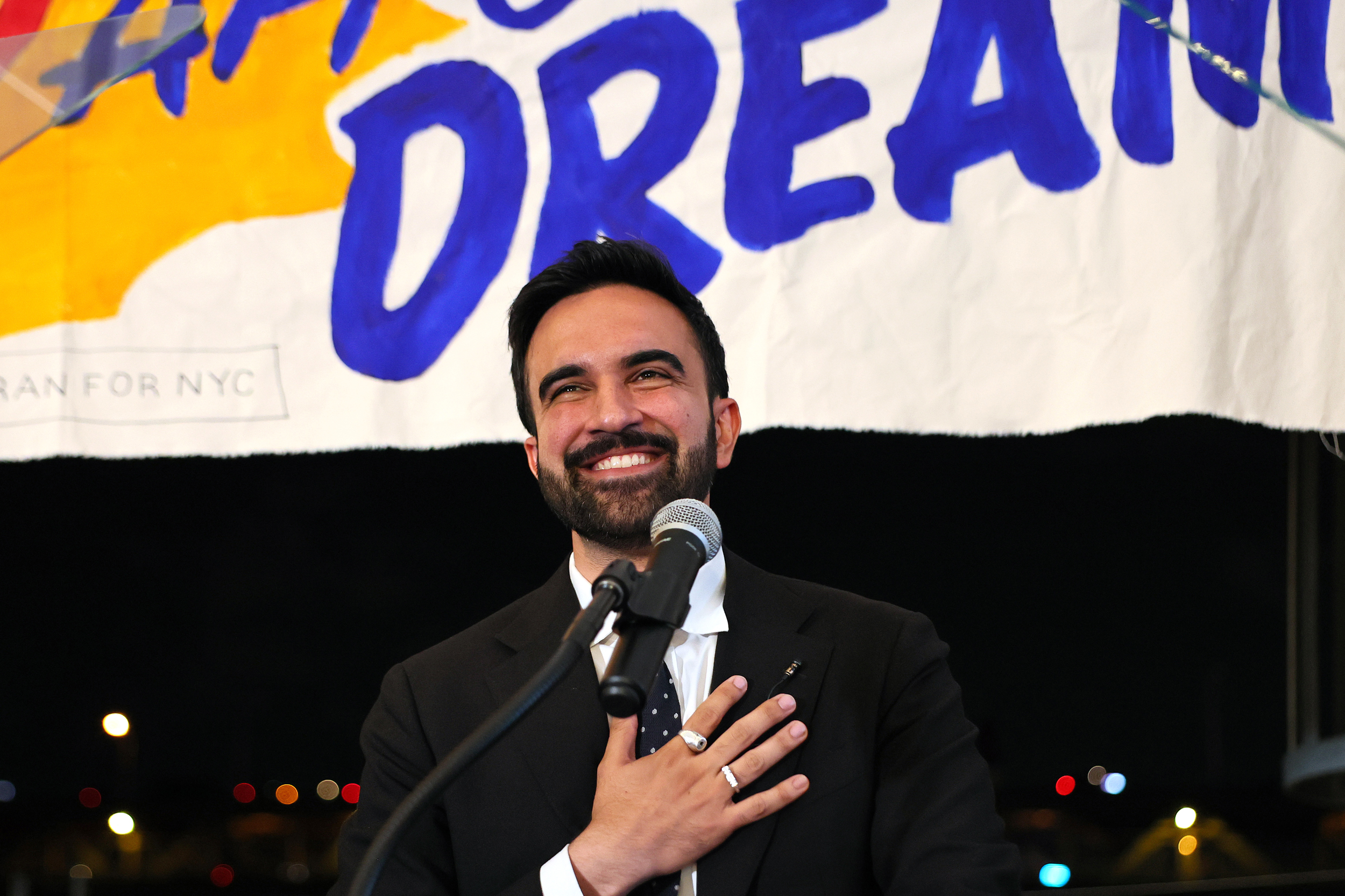
In June 2025, he won the Democratic primary in a major upset — defeating former Governor Andrew Cuomo. Then, in November 2025, he won the general election with 50.4% of the vote, against Cuomo (who ran as an independent) and Republican Curtis Sliwa. His victory marked him as the first Muslim mayor and the first Indian-Ugandan mayor of NYC — historic for a city that defines itself by diversity.
He’s scheduled to take office on January 1, 2026.
The Platform: What Zohran Mamdani Stands For
Zohran Mamdani’s campaign wasn’t just about hope — it was built on policy. Below are his core pillars and what they mean for New York City:
1. Housing Affordability & Rent Freeze
He proposed a rent freeze on all rent-stabilized units. For many New Yorkers, especially those in working-class neighborhoods, rising rent is one of the top stressors of daily life. Mamdani argues that unchecked rent inflation is a systemic issue, not just bad luck or market weirdness. By freezing rents, he believes the city can protect renters without destroying the real estate market — though critics worry about the long-term sustainability.
2. Fare-Free Public Buses
One of Mamdani’s most talked-about promises is to make city buses free. Buses are a backbone of daily transport for many New Yorkers, especially those who can’t afford subway or taxi fares. A fare-free system could reduce inequality, ease commuting costs, and more equitably distribute the benefits of public transit. He’s not just talking; he helped pilot a free-bus program in his time as Assemblyman.
3. Universal Public Childcare
Childcare costs in NYC are notoriously high, putting a heavy burden on families. Mamdani envisions a public childcare system that’s affordable for working parents, giving them freedom to work, study, or just breathe without fearing bankruptcy.
4. City-Run Grocery Stores
To tackle “halalflation” and food inflation more broadly, Mamdani proposed city-owned grocery stores. These wouldn’t just be social experiments — he sees them as practical infrastructure to ensure food access and reduce dependence on purely private-market grocery chains.
5. Living Wage: $30 Minimum by 2030
Mamdani’s wage goal is bold: he wants a $30 minimum wage in the city. While that’s a far cry from the current base in many places, it’s emblematic of his broader push to reshape how value is defined in New York — to reward labor, not just profit.
6. Tax Reform & Wealth Redistribution
He supports raising taxes on corporations and high earners (those making over $1 million). The idea is to fund his social programs — childcare, buses, housing — without leaving the burden on working-class New Yorkers. He frames it as an investment in the city’s future, not a handout.
7. Social Justice & Public Safety Reform
Beyond the economy, his campaign touched on systemic reforms: policing, inclusion, civil rights, and community-driven safety. He’s spoken about rethinking public safety systems, though he doesn’t propose a simplistic “defund the police” slogan — he’s more nuanced, focusing on reform, investment, and trust-building.
Why Zohran Mamdani’s Win Matters
Mamdani’s ascension to New York City Mayor is more than a personal victory. It represents a generational and ideological shift. Here’s why his win has resonance:
-
Historic firsts: He will be the first Muslim mayor, the first South Asian-Ugandan mayor, and one of the youngest.
-
Youth-led movement: His campaign energized younger voters who often feel disconnected from traditional politicians. Many credit his strong social media presence for that.
-
Progressive policy momentum: His platform could reshape public services in NYC, challenging conventional fiscal conservatism in one of America’s richest cities.
-
Broader political meaning: His win may signal a broader appetite for democratic socialism in urban America, especially in a climate of increasing economic inequality.
Criticisms and Challenges
No major political figure arrives without skeptics. Here are some of the criticisms Mamdani has faced — and hurdles he’ll need to navigate as mayor:
-
Lack of experience? Critics point out that before his State Assembly role, he had limited formal governance experience.
-
Passing legislation: Some argue that, during his Assembly tenure, only a few of his many bills became law.
-
Funding his programs: Ambitious proposals — like free buses and universal childcare — require serious funding. Raising taxes on the wealthy may generate revenue but also face political resistance.
-
Balancing ideology and practice: Progressive ideas are inspiring, but turning them into pragmatic policies in a city as large and complex as New York will be a tough balancing act.
The Human Side: Personality, Style & Values
One of the most compelling parts of Mamdani’s story is how he connects with people:
-
Authentic humility: Whether he’s filming a low-key TikTok or chatting on the subway, he comes across as grounded and sincere.
-
Creative communicator: His background in music gives him a different voice — literally. He’s not just reciting policy, he’s telling stories.
-
Bridge-builder: Despite being a democratic socialist, he’s built broad coalitions, speaking to young voters, working-class communities, and people across ethnic lines.
-
Global sensibility: With roots in Uganda, India, and the U.S., his heritage shapes a worldview that’s both local and global — something that resonates in a city as diverse as New York.

What Comes Next: What to Watch During His Mayoral Term
As he prepares to take office on January 1, 2026, here are key areas where Mamdani’s leadership will be tested:
-
Implementation of his signature policies
-
Will the fare-free bus plan be scaled city-wide?
-
How will rent freezes be enforced — and what unintended consequences might emerge?
-
Can city-run grocery stores become financially sustainable?
-
-
Budget balancing
-
Can higher taxes on corporations and millionaires realistically fund his agenda?
-
How will he manage pushback from business leaders and moderate politicians?
-
-
Governance and administration
-
Who will he appoint to key city departments?
-
Will he bring in experienced leaders, or rely on a new wave of progressive talent?
-
-
Public safety reforms
-
How will he navigate reforming policing while ensuring safety?
-
Can he build trust across communities, especially those skeptical of change?
-
-
Political resistance
-
How will he handle opposition from established Democratic figures, moderate voters, and business interests?
-
Can he maintain grassroots momentum while making necessary compromises?
-
Why His Story Resonates — And Why It Matters to You
Whether you live in New York or not, Zohran Mamdani’s election is symbolic of broader currents in politics and society:
-
It shows how a candidate with authenticity, digital savvy, and progressive ideas can compete – and win – in a major city.
-
It challenges the notion that “young, idealistic” politicians can’t deliver real change.
-
It underscores the urgency and power of affordability, housing, and social equity in modern urban life.
-
It’s a reminder that diverse backgrounds — immigrant stories, diasporic perspectives, cross-cultural roots — are increasingly central to political leadership.
Conclusion: A New Chapter Begins
In short, the New York City Mayor going forward — Zohran Mamdani — isn’t just another politician. He’s a generational figure, a bridge between grassroots activism and citywide power. His victory is historic, but the real test begins now: turning his progressive platform into real, everyday improvements for millions of New Yorkers.
So, what do you think? Will his promise of fare-free buses, rent freezes, and a living wage reshape New York? Or will the city’s challenges — fiscal, bureaucratic, political — prove too steep? Let me know your thoughts. And if you found this breakdown helpful, feel free to share or comment.
Here’s to watching a bold new chapter in New York City’s story.